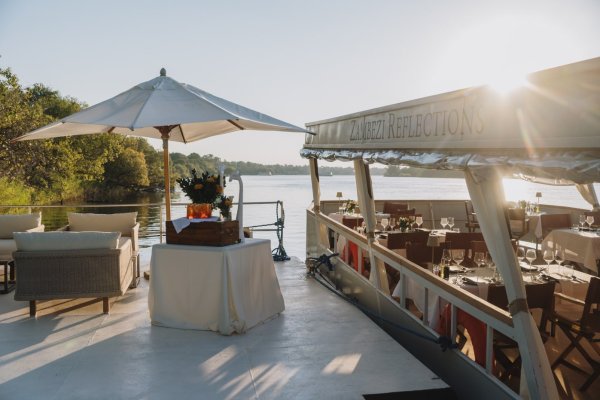
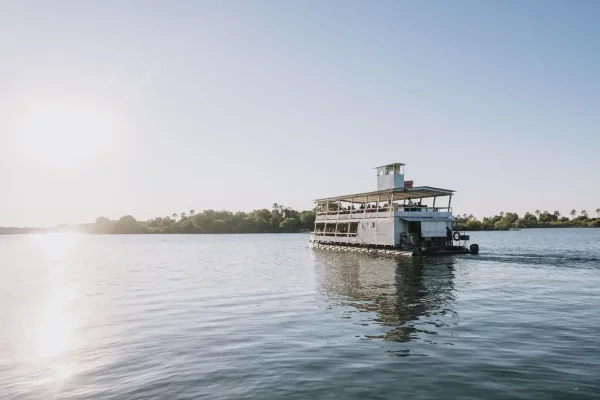
Most visitors come to Victoria Falls for the waterfall, the adrenaline activities and the sunset views. Few realise the same stretch of the Zambezi above the Falls, the water Pure Africa’s cruises run on, holds one of the richer concentrations of bird species in southern Africa.
A sunrise, sunset or scenic river cruise moves along that same water low and slow enough that species most visitors would otherwise miss come into view. This guide covers what you’re likely to see, when to go, what to bring and who tends to get the most out of it.

Best Birds to Spot
Watching birds from a Zambezi cruise rewards patience more than distance. A cruise moves slowly along the same stretch of river for two or three hours, which means birds that would flush from a footpath stay put, going about their business a few metres from the boat.
The African fish eagle is often heard before it’s seen: a high, ringing call that carries across the water and back off the riverbank. Look for pairs perched high in dead trees along the banks, especially early morning when they call to establish territory.
Kingfishers are the easiest reward for a first-time birder. The malachite kingfisher, electric blue and barely the size of a thumb, hunts from low reeds close to the boat. The giant kingfisher, three times its size, tends to work the same stretches of bank but from higher perches, diving for barbel and tilapia in the shallows.
Herons and storks work the margins in numbers: goliath herons standing motionless in the shallows, African darters drying spread wings on half-submerged branches, and hamerkops carrying sticks toward nests that can take weeks to build. White-fronted bee-eaters nest in colonies along the sandbanks, the burrow entrances visible from the water well before you spot a bird going in or out. African skimmers, distinctive for a lower mandible longer than the upper, are one of the more striking sights at dusk, skimming the calm water as they feed.
None of this needs specialist knowledge to enjoy. Victoria Falls birdwatching from the water is as much about watching ordinary behaviour up close, a fish eagle calling from a dead tree, a heron stalking, a bee-eater working a colony, as it is about ticking rare species off a list.

Seasonality
The best time for birding in Victoria Falls depends on what you want to see.
The dry season, roughly May to October, is the easier introduction. Water levels drop, sandbanks and mudflats appear along the river’s edge, and species like the African skimmer become far more visible as they gather on the exposed banks. Vegetation thins out too, so birds that hide in thick riverine bush during the rains are easier to pick out against bare branches.
The wet season, November to April, brings a different reward: migratory species. Palearctic migrants arrive from Europe and Asia, and intra-African migrants move up from further south, so species counts on a cruise can actually run higher during these months than in the dry season, even though the birding itself takes more effort. Breeding plumage is at its best in this period too, which matters if photography is part of the appeal.
Early morning is the strongest window regardless of season. Birds are most active and vocal in the first two hours after sunrise, before the heat sets in and activity along the river quietens down. It’s also the quietest time on the river itself, with hardly any other boats out, so birds along the banks stay settled rather than scattering at engine noise. A sunrise cruise tends to produce more sightings, and more interesting behaviour (fish eagles calling, kingfishers actively hunting) than an afternoon cruise timed for the light rather than the birds.
If forced to choose one season, the dry months from July to September offer the most reliable, easiest birding for a first cruise: lower water, better visibility, resident species settled into predictable territories.

What to Bring on the Water
Binoculars are the one item worth getting right. A pair with 8x magnification and a wide field of view works better on a moving boat than anything with higher zoom, which becomes hard to hold steady once the engine’s running. Bringing your own is worth it if you have a pair, since operators can’t always guarantee spares on board.
Dress in layers. Early cruises start cool, sometimes cold enough for a jacket in the winter months (June to August), and warm up quickly once the sun’s properly up. Neutral colours (khaki, olive, grey) work better than bright clothing, which can startle birds close to the boat.
A hat and sun protection matter more than people expect, since there’s little shade on the water and the glare off the river adds to direct sun exposure. For anyone serious about photography, a zoom lens in the 300–400mm range captures birds at a realistic distance without disturbing them, though a phone camera will still get decent shots of larger species like herons and fish eagles that tolerate a close approach.
A notebook or a bird app on your phone is useful if you like keeping a list, though it isn’t necessary. The staff on board are familiar with the common species along the river and will usually point them out as you pass, which does much of the identification work for you.

Who gets the most out of it?
Watching birds from a Zambezi cruise suits a wider range of people than you might assume. Serious birders with a life list to build will get the most out of it, particularly with a Private Sunrise Cruise and a Captain who can slow down or double back when something interesting appears.
First-time birders and the simply curious tend to enjoy it just as much, often more than they expect. There’s no walking and no waiting in a hide. The boat does the hard work of getting close to the birds, which makes it an easy way into birdwatching without needing to know a single species beforehand.
Couples and families looking for a scenic Zambezi cruise with something more to it than the view will also find it worthwhile. The birdlife runs alongside everything else the river offers: elephants at the water’s edge, hippos surfacing mid-channel, the light changing over the water. Nobody on board needs to be a committed birder for the cruise to hold their attention.
The one group who might prefer a different format is anyone wanting total quiet for extended observation of a single species. A cruise moves, which means more variety but less time with any one bird. For that kind of patient, single-subject birding, a dedicated hide suits better than a boat.

Frequently Asked Questions
Is a Zambezi cruise good for birdwatching?
Yes, even for visitors who wouldn’t normally call themselves birders. Pure Africa’s Zambezi cruises put you within metres of fish eagles, kingfishers, herons and bee-eaters going about ordinary behaviour, a different experience from the fleeting glimpses birding usually involves. Add in the wider wildlife along the banks (elephant, hippo, occasional buffalo) and the sunrise or sunset light most cruises are timed around, and it holds up as one of the better-value activities in Victoria Falls, birder or not.
What birds can be seen?
African fish eagles, malachite and giant kingfishers, goliath herons, African darters, hamerkops, white-fronted bee-eaters and African skimmers are the species most cruises turn up. Exact sightings depend on the day, the season and where you are on the river, but a two to three hour Zambezi cruise will typically produce a genuinely varied list.
Is bird watching from the water good for beginners?
It’s one of the easier ways into birdwatching. There’s no walking and no hide, and the boat gets you close enough that species are easy to see without specialist knowledge. Beginners tend to leave with a handful of species they can now recognise by sight, which is a faster start than most people get from birding on land.
If you’d like to book a cruise to spot birds on the Zambezi, or want to know which time of year suits what you’re hoping to see, the team at Pure Africa can help you plan it. Get in touch at [email protected].